Quick Summary
The gut and brain communicate through the vagus nerve, microbial metabolites, the immune system, and the stress axis. But gut serotonin cannot cross into the brain, and most striking gut-brain findings come from mice. The best-supported treatment runs the other way: psychological therapy that settles the gut.
The gut and the brain are genuinely in constant conversation. That part is not wellness marketing — it is a well-mapped area of physiology with a dedicated research field behind it.
What gets oversold is the leap from that fact to specific promises: fix your microbiome, fix your mood. The mechanism is real. The evidence that you can reliably steer it with a supplement is much thinner than the confidence with which it is usually stated.
How the Gut and Brain Actually Talk
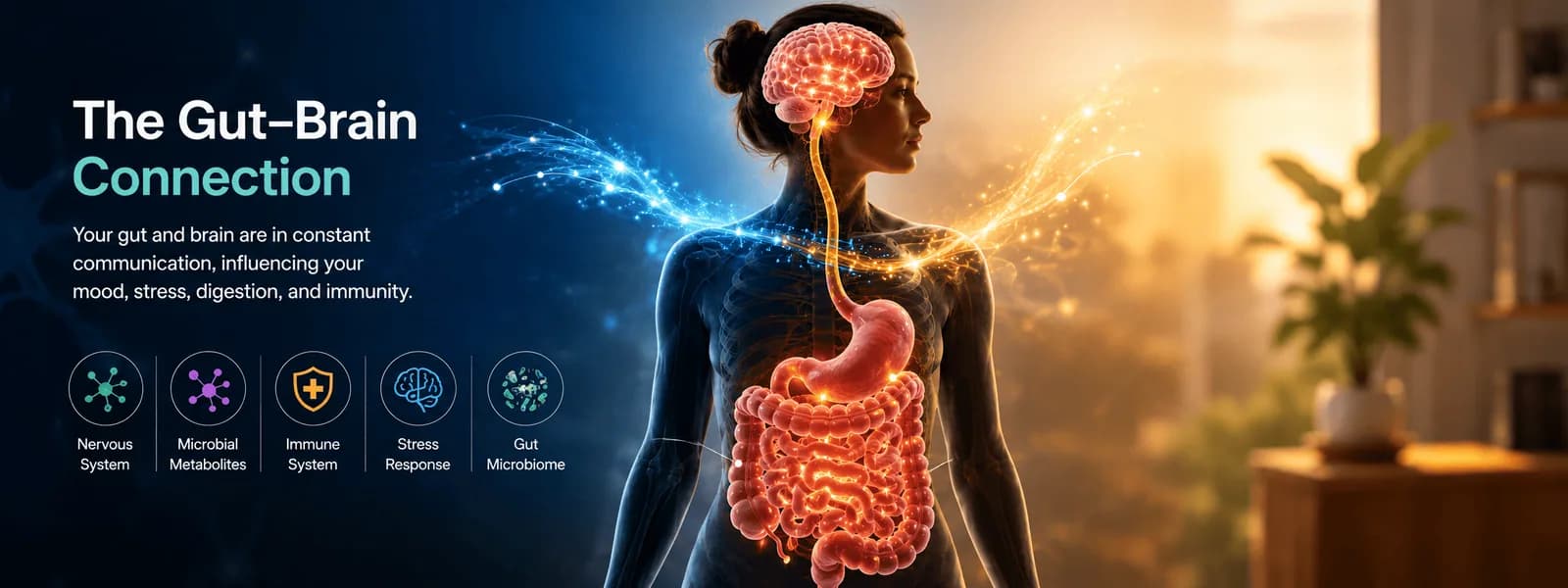
There is no single channel. The gut-brain axis is several systems running in parallel, which is part of why it took so long to characterize:
- The vagus nerve, a direct physical line carrying signals in both directions
- Microbial metabolites, including short-chain fatty acids produced when bacteria ferment fiber
- The immune system, since most immune tissue sits in the gut and inflammatory signals reach the brain
- The HPA axis, the hormonal stress pathway that changes gut motility and secretion
- The enteric nervous system, a mesh of neurons in the gut wall that operates largely on its own
That last one earns the gut its nickname as a second brain, and it is the most misunderstood part. The enteric nervous system contains hundreds of millions of neurons and can coordinate digestion without instruction from above. It is not, however, doing anything resembling thought.
The vagus nerve deserves singling out, because it is the only one of these channels that is a physical wire rather than a chemical signal, and the traffic on it is lopsided. Roughly eighty percent of its fibres are afferent — carrying information up from the organs to the brain, not instructions down. Anatomically, your gut is doing far more reporting than it is receiving.
That asymmetry is why the phrase “gut feeling” is less metaphorical than it sounds. A large share of what the brain knows about your internal state arrives this way, below the level of conscious awareness, and it contributes to mood and threat assessment without ever presenting itself as information about digestion. It is also why vagal signalling is an active target in neuromodulation research — though that work involves implanted or transcutaneous stimulation, not anything you can buy.
The Serotonin Claim, Corrected
You have probably read that around 90 to 95 percent of your serotonin is made in the gut, usually followed by the suggestion that gut health therefore drives your mood. The first half is true. The conclusion does not follow.
Serotonin does not cross the blood-brain barrier. Serotonin made in your gut stays in the periphery, where it regulates motility, secretion, and platelet function — it never becomes the serotonin your brain uses, which the brain synthesizes for itself. A 2015 study did show that particular gut bacteria drive serotonin production in the colon, but that finding is about gut physiology, and it was done in mice.
Gut serotonin is not a spare supply waiting to be routed upstairs. It has a job where it is made. It triggers the peristaltic reflex that moves contents along, drives secretion, and signals nausea to the brainstem through the vagus — which is a message about serotonin, not a delivery of it.
The clearest everyday demonstration is the side-effect profile of SSRIs. These drugs raise available serotonin throughout the body, and the most common early complaints are gastrointestinal: nausea, loose stools, cramping. That is peripheral serotonin doing exactly what peripheral serotonin does. If gut serotonin drove mood directly, the mood effect would arrive as fast as the nausea does. It does not — antidepressant benefit typically takes weeks while the digestive effects appear within days, which is itself evidence that the two pools are doing separate jobs.
Why Stress Goes Straight to Your Stomach
The traffic runs in both directions, and the downward direction is the better established of the two. Nearly everyone has experienced it: nausea before an interview, urgency before an exam, appetite disappearing during a bad week.
Acute stress speeds up colonic motility and slows gastric emptying, which is a fairly direct route from a stressful morning to an uncomfortable one. Sustained stress does more: it alters gut permeability, shifts microbial composition, and raises the sensitivity of the gut's own nerves, so ordinary digestive sensations start registering as pain.
This is why irritable bowel syndrome is now classed as a disorder of gut-brain interaction rather than a purely digestive complaint — and it is far from rare. A 33-country survey of more than 73,000 adults found that over 40 percent meet criteria for at least one condition in that family.
The machinery behind that is the hypothalamic-pituitary-adrenal axis, the body's stress-hormone cascade. Activation releases cortisol, which alters gut motility, increases intestinal permeability, and shifts the composition of the microbial community — and the resulting microbial signals feed back into the same axis. It is a genuine loop rather than a one-way street, which is why a stressful month can leave digestion unsettled for longer than the stress itself lasted.
What's Proven, and What Comes From Mice
Almost every striking gut-brain headline you have seen traces back to rodent work. Transferring microbiota from anxious mice into germ-free mice transfers anxious behavior. It is a genuinely remarkable result, and it is a mouse result.
The problem is not that mice are useless. It is that these experiments depend on conditions no human is ever in. Germ-free mice are raised in sterile isolators with no microbiome at all, which alters their immune development and their brains from birth. Introducing bacteria into that void produces large, clean effects. Adding a capsule to an adult who already carries trillions of established microbes is a completely different proposition, and the effects are correspondingly smaller and harder to measure.
| Claim | Evidence in humans |
|---|---|
| Gut and brain communicate constantly | Strong — well-mapped anatomy and physiology |
| Stress worsens gut symptoms | Strong — consistent, and clinically acted on |
| Treating the brain helps the gut | Strong — psychological therapy is guideline-recommended for IBS |
| Changing the microbiome improves mood | Weak — small trials, short follow-up, mixed results |
| A specific probiotic treats depression | Not established |
What the Human Trials Show
Two lines of human evidence are worth knowing, because they point in different directions and get quoted with equal confidence.
The stronger one is dietary. The SMILES trial randomised 67 adults with moderate to severe depression to either twelve weeks of dietary counselling toward a modified Mediterranean pattern, or a social support protocol matched for contact time. The diet group improved significantly more on the standard depression rating scale. It is a genuinely important result — an actual randomised trial of food as adjunctive treatment for diagnosed depression, not an observational association. It is also small, single-blind, and one trial, and a dietary intervention cannot blind the people receiving it, so expectancy is impossible to rule out.
The weaker one is supplements. A 2024 meta-analysis pooled 23 randomised trials in clinically diagnosed patients and reported a large effect for probiotics on depression and a moderate one on anxiety. Read past the headline and the authors themselves flag the problems: heterogeneity was very high, publication bias was substantial, and most of the individual trials were underpowered with risk-of-bias concerns. Prebiotics showed no significant effect at all.
A large pooled effect built from small, heterogeneous, selectively published trials is the pattern that tends to shrink as bigger and better-designed studies arrive. That does not make it wrong. It does mean the honest summary is “promising and unresolved,” which is a different thing from the “clinically proven” that appears on packaging.
What Actually Helps
The best-supported way to use the gut-brain axis is the opposite of how it is usually marketed. Rather than taking something to fix the gut and hoping the mind follows, the evidence favors treating the brain end to settle the gut.
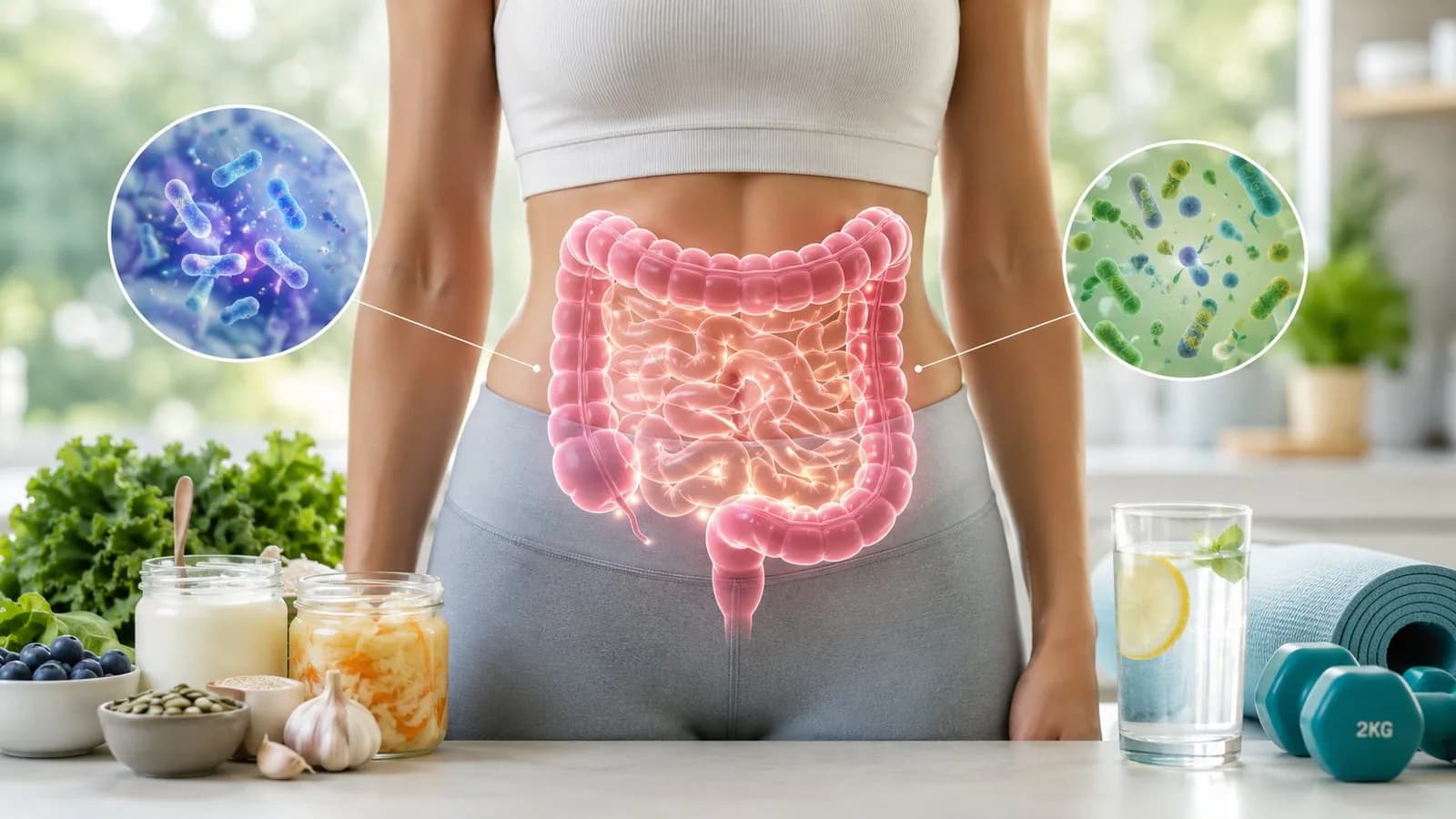
The American College of Gastroenterology's IBS guideline recommends gut-directed psychological therapy to improve overall symptoms. Not as a last resort once tests come back clear, and not as a suggestion that the symptoms are imagined — as a treatment that works on a real mechanism. Alongside it, the ordinary advice holds: a varied, fiber-rich diet feeds the bacteria that produce short-chain fatty acids, regular sleep steadies the stress axis, and exercise helps both ends at once.
It is worth being concrete about what “gut-directed psychological therapy” means, because the name suggests talking about your feelings and it is not that. Gut-directed hypnotherapy uses structured suggestion aimed specifically at intestinal sensation and motility, usually across six to twelve sessions. Gut-directed cognitive behavioural therapy targets the attention and avoidance patterns that amplify visceral signals — the vigilance that turns ordinary gut sensation into pain, and the food and situation avoidance that narrows life around the symptom.
Neither treats the symptoms as imaginary. They work on the volume control rather than the signal, which is a coherent target precisely because the axis carries so much afferent traffic. The trial evidence sits alongside dietary approaches rather than behind them, which is why a gastroenterology guideline recommends it outright rather than reserving it for people who have exhausted everything else.
Expectations matter as much as the choice. None of these is a switch that flips: guideline-recommended psychological therapy for IBS is measured over weeks, and dietary change works on a similar timescale. Anything promising a mood shift within days is describing something the research has not shown.
If you want to act on the dietary evidence specifically, note what SMILES actually changed. Participants were not put on a supplement or an elimination protocol. They were coached toward more vegetables, fruit, wholegrains, legumes, fish, olive oil and nuts, and away from refined carbohydrates, sugar and processed meat — the same pattern that shows up in cardiovascular and metabolic research, delivered by a dietitian over seven sessions. The support was part of the intervention, not incidental to it.
Two practical cautions follow from the mechanism rather than from caution generally. First, because the axis runs downward more reliably than upward, persistent gut symptoms during a stressful period are often the stress expressing itself, and treating the gut alone tends to disappoint. Second, the reverse inference is unsafe: assuming low mood must be a microbiome problem can delay treatment for depression, which has therapies with far better evidence than anything in this article.
Frequently Asked Questions
Is the gut really a second brain?
It has its own nervous system — hundreds of millions of neurons in the gut wall that can coordinate digestion independently. That earns the nickname, but it does not think, feel, or make decisions. It manages digestion without needing instructions from your brain.
Does gut serotonin affect mood?
Not directly. Around 90 to 95 percent of the body's serotonin is made in the gut, but serotonin cannot cross the blood-brain barrier, so it stays in the periphery regulating motility and platelet function. Your brain makes its own serotonin separately.
Can probiotics improve anxiety or depression?
The evidence is not strong enough to say so. Trials in humans are small, short, and inconsistent, and results for one strain do not transfer to another. Most of the striking findings behind the claim come from studies in mice.
Why does stress cause diarrhea or nausea?
Stress hormones act directly on the gut. Acute stress speeds up movement through the colon and slows stomach emptying, and sustained stress raises the sensitivity of the gut's nerves so normal digestion starts to register as discomfort.
What actually helps gut-brain symptoms?
Gut-directed psychological therapy has the strongest support and is recommended in the American College of Gastroenterology's IBS guideline. A varied fiber-rich diet, consistent sleep, and regular exercise help both ends of the axis.
References
- Cryan JF, O’Riordan KJ, Cowan CSM, et al. "The Microbiota-Gut-Brain Axis." Physiological Reviews, 2019;99(4):1877-2013.
- Yano JM, et al. "Indigenous Bacteria from the Gut Microbiota Regulate Host Serotonin Biosynthesis." Cell, 2015;161(2):264-276.
- Sperber AD, et al. "Worldwide Prevalence and Burden of Functional Gastrointestinal Disorders, Results of Rome Foundation Global Study." Gastroenterology, 2021;160(1):99-114.
- Lacy BE, Pimentel M, Brenner DM, Chey WD, Keefer LA, Long MD, Moshiree B. "ACG Clinical Guideline: Management of Irritable Bowel Syndrome." American Journal of Gastroenterology, 2021;116(1):17-44.
- Jacka FN, O’Neil A, Opie R, et al. "A randomised controlled trial of dietary improvement for adults with major depression (the ‘SMILES’ trial)." BMC Medicine, 2017;15(1):23.
- Asad A, et al. "Effects of Prebiotics and Probiotics on Symptoms of Depression and Anxiety in Clinically Diagnosed Samples: Systematic Review and Meta-analysis of Randomized Controlled Trials." Nutrition Reviews, 2024;83:e1504-e1520.