
Quick Summary
Your gut microbiome affects digestion, immunity, and mood. Bloating, irregular bowel movements, and fatigue are common early signs of imbalance. Fiber, fermented foods, and sleep have the strongest evidence for improving gut health — most supplements don't.
What Is Gut Health, and Why Does It Matter?
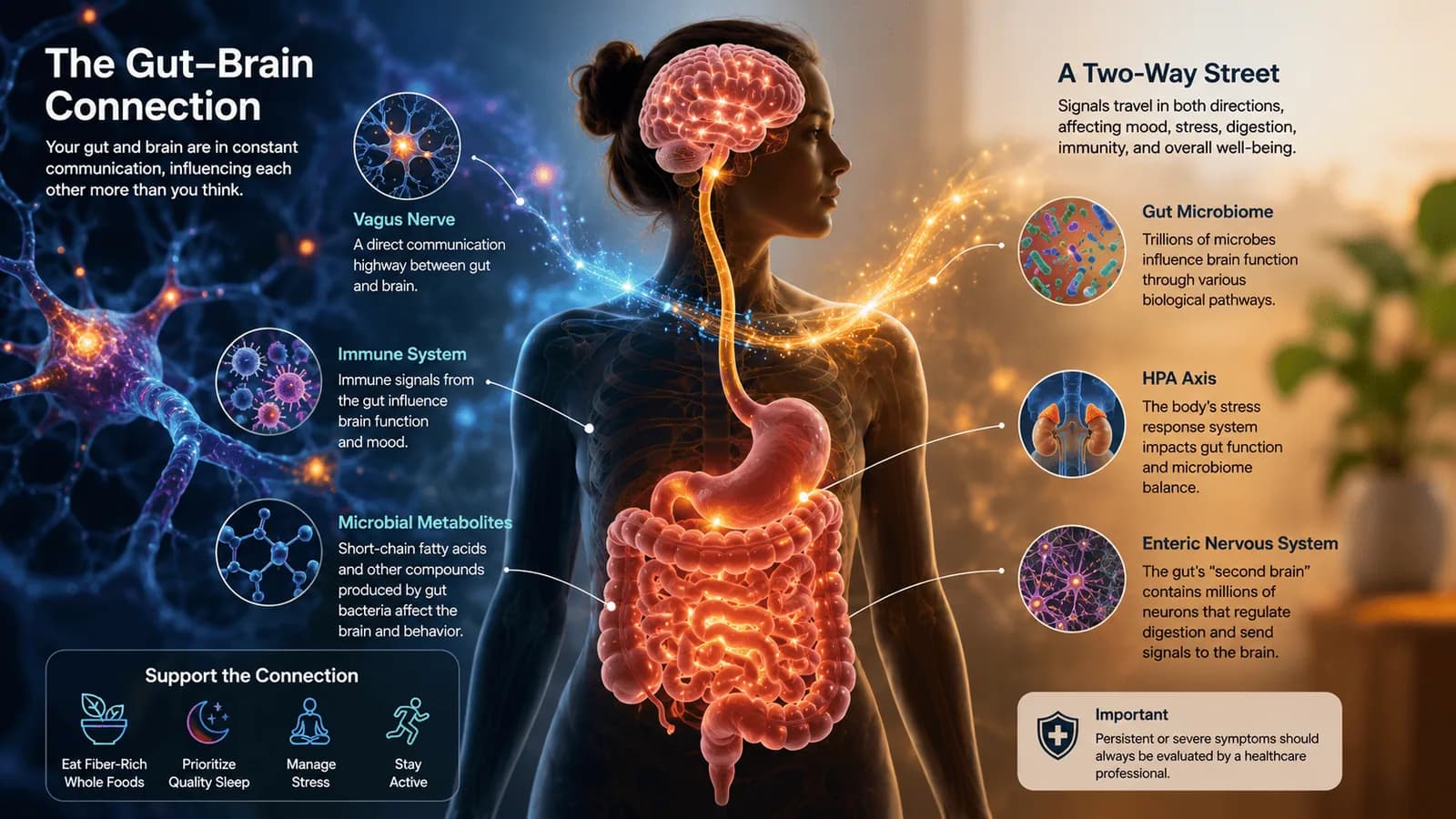
Your gut is home to trillions of bacteria, fungi, and other microbes — collectively called the gut microbiome. This ecosystem does more than digest food: it produces vitamins, trains your immune system, and communicates directly with your brain through what researchers call the gut-brain axis.
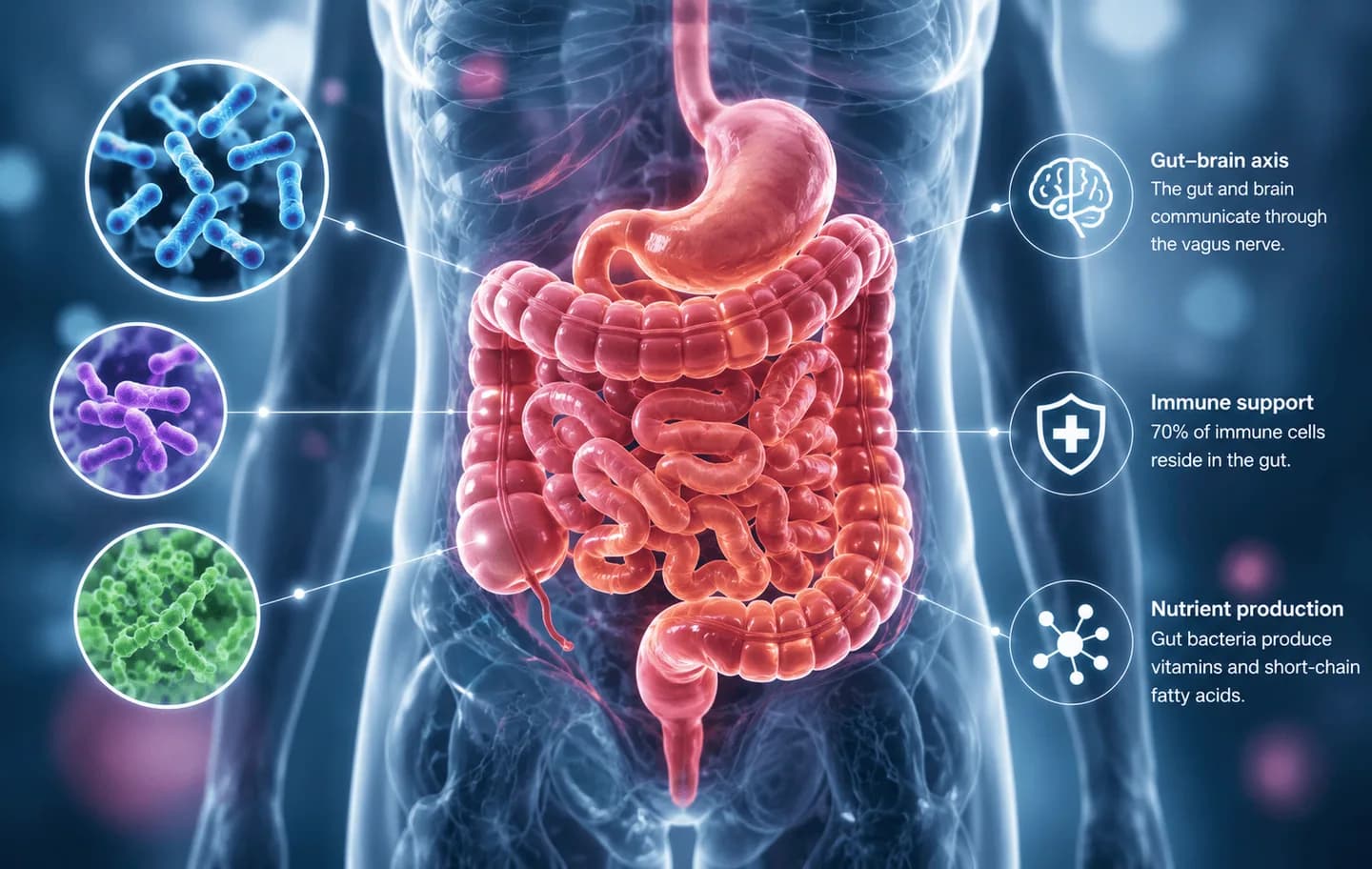
When the microbiome is diverse and balanced, digestion runs smoothly and inflammation stays low. When it's disrupted — a state researchers call dysbiosis — it's been linked to issues ranging from irritable bowel syndrome to mood disorders and metabolic disease.
Much of that work runs on short-chain fatty acids — compounds your gut bacteria produce by fermenting the fiber you can't digest yourself. Butyrate, the best studied of them, is the main fuel for the cells lining your colon. That's one reason fiber keeps surfacing as the most consistent dietary lever in this research: you aren't only feeding yourself, you're feeding the microbes that do the work.
Signs Your Gut Health May Be Off
Gut issues don't always show up as stomach pain. Watch for these common signals:
- Frequent bloating, gas, or irregular bowel movements
- Unintended weight changes without diet or activity changes
- Persistent fatigue or trouble sleeping
- Skin issues such as eczema or acne
- Food intolerances that developed later in life
None of these is specific to the gut, which is what makes self-diagnosis unreliable. Fatigue, skin flare-ups, and irregular digestion all have causes that have nothing to do with your microbiome. Treat them as a reason to look at diet, sleep, and stress together — not as proof that gut bacteria are behind it.
What Causes Gut Imbalances
Diet is the biggest lever, but not the only one. A diet low in fiber and high in ultra-processed food reduces microbial diversity within days. Antibiotics — while sometimes necessary — can wipe out beneficial bacteria along with harmful ones, and recovery can take months. Chronic stress alters gut motility and the composition of the microbiome through the gut-brain axis. Poor sleep and a sedentary lifestyle are also independently associated with lower microbial diversity.
The antibiotic effect has been measured directly. When researchers gave twelve healthy men a four-day course of three broad-spectrum antibiotics, gut bacteria were almost entirely cleared, and overall diversity took roughly six weeks to return toward baseline. Six months on, the men were still missing nine of the beneficial species they had started with. The microbiome is resilient, but resilience isn't the same as full recovery.
Alcohol, age, and acute illness shift the picture too, though less predictably than diet. Chronic heavy drinking is consistently associated with lower diversity. What none of these has is a clean threshold where a healthy gut becomes an unhealthy one — the research describes gradients, not switches.
Foods That Help vs. Foods That Harm
| Supports Gut Health | Disrupts Gut Health |
|---|---|
| Fiber-rich vegetables, legumes, whole grains | Ultra-processed foods, refined sugar |
| Fermented foods (yogurt, kimchi, kefir) | Frequent, unnecessary antibiotic use |
| Polyphenol-rich foods (berries, olive oil, tea) | Chronic high alcohol intake |
| Diverse plant intake (30+ types per week) | Chronic sleep deprivation |
How to Improve Gut Health
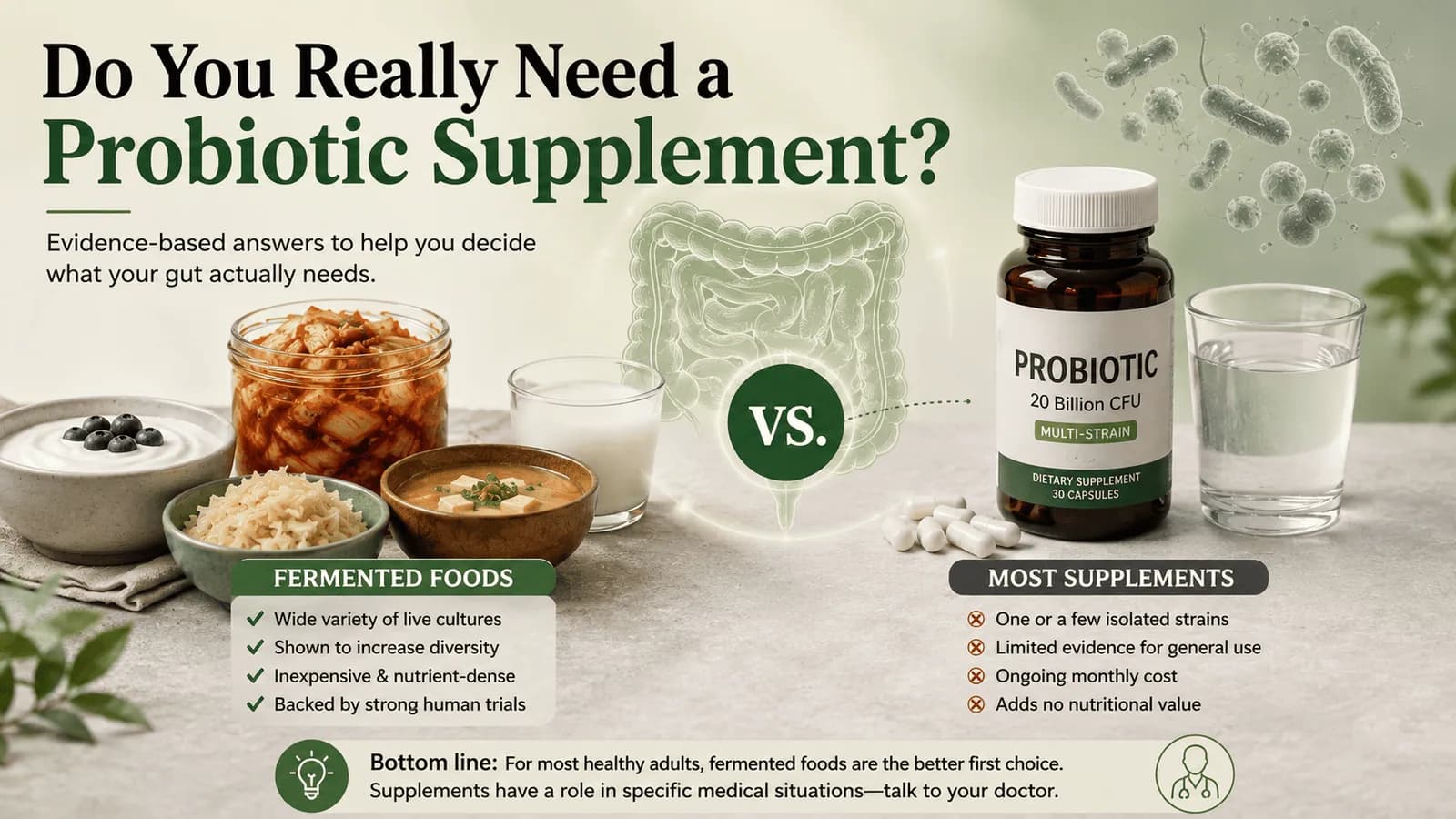
The changes with the strongest evidence are also the least exciting: eat more fiber and fermented food, move regularly, sleep enough, and limit unnecessary antibiotics. Most probiotic supplements have modest, strain-specific effects — food sources are generally a better starting point.
Eat More Plants — and More Kinds of Them
The American Gut Project, which analyzed more than 15,000 samples, found that people eating over 30 different plant types a week had measurably more diverse gut microbiomes than those eating ten or fewer. What it did not find was any relationship between diversity and how people labeled their diet — “vegan” and “omnivore” told the researchers nothing on their own. The variety mattered; the label didn't. This is observational work, so it shows an association rather than proof that adding plants causes the change.
Thirty sounds like a lot until you count properly. Herbs, spices, nuts, seeds, whole grains, legumes, and coffee all count, and a single mixed salad or a handful of trail mix can add four or five at once. Counting varieties across a week rather than a day is what makes the target reachable.
Add Fermented Foods
A seventeen-week randomized trial split healthy adults between a high-fiber diet and a high-fermented-food diet. The fermented-food group showed steadily increasing microbial diversity and a decrease across nineteen inflammatory proteins. The high-fiber group showed neither over the same period — diversity held steady, and none of those markers fell. That doesn't make fiber useless, and the researchers were careful not to claim it did. It does suggest fermented foods do something fiber alone doesn't, at least on that timescale and in healthy adults.
Yogurt with live cultures, kefir, kimchi, sauerkraut, miso, and kombucha are the usual starting points. Check that they're refrigerated and, where it applies, unpasteurized — shelf-stable sauerkraut has generally been heat-treated, which kills the cultures you're buying it for.
Move Regularly, and Protect Your Sleep
Six weeks of endurance training raised fecal short-chain fatty acids in lean participants in one controlled trial, alongside matching shifts in the bacterial genes responsible for producing them. Two caveats came with it: the effect did not appear in participants with obesity, and it largely reversed once training stopped. Exercise appears to move the microbiome, but only while you keep doing it.
Sleep and stress run through the same channel in the other direction. The gut and brain communicate directly along the vagus nerve, so chronic stress alters gut motility and microbial composition, and poor sleep tracks with lower diversity. Neither is a lever you pull once — they're the background conditions everything else operates in, which is why a careful diet on four hours of sleep tends to underdeliver.
What the Evidence Does and Doesn't Support
Gut health has attracted considerably more products than findings. Sorting the two apart is most of the practical work, so here is where the main claims actually sit:
| Claim | Where the evidence sits |
|---|---|
| Diet shifts microbial composition within days | Well established, and demonstrated in both directions |
| Fermented foods raise diversity and lower inflammatory markers | Supported by a randomized trial — one trial, healthy adults, seventeen weeks |
| Greater plant variety tracks with greater diversity | Observational across 15,000+ samples; an association, not proof of cause |
| Exercise changes the microbiome | Suggested; varied by body composition and reversed when training stopped |
| Dysbiosis contributes to IBS, mood, and metabolic disease | Associations are consistent; the direction of cause remains unresolved |
| A test kit can tell you what your gut needs | Not supported; results differ between providers as much as between people |
Direct-to-consumer microbiome test kits deserve the most caution, because they look the most scientific. When researchers sent identical, standardized stool material to seven of these services, the results disagreed — not marginally, but on the same scale as the difference between two unrelated donors, and for some bacterial genera the methodological noise exceeded the biological difference between people. There are currently no regulatory-approved clinical microbiome diagnostics. A kit can tell you something was sequenced. It can't reliably tell you what's in your gut, still less what to do about it.
Cleanses and detox protocols are the other recurring category. There's no good evidence that flushing the colon improves microbial composition, and aggressive versions can disturb fluid and electrolyte balance. The gut doesn't accumulate a residue that needs removing.
The pattern worth watching for is a product claiming a precision the underlying science doesn't yet have:
- Test kits that promise a personalized diet from a single sample
- Colon cleanses and detox protocols sold for “resetting” the gut
- Supplements marketed for “leaky gut,” which isn't an established clinical diagnosis
- Any single food or product described as fixing the microbiome on its own
How Long Before You Notice a Difference
Compositional changes begin within days — that's how quickly a low-fiber, heavily processed diet reduces diversity, and it runs in the other direction too. What takes longer is the part you feel. Less bloating can show up inside a week, while meaningful, stable shifts in diversity generally need four to eight weeks of consistent change.
Recovery from a specific disruption runs on its own clock. After the four-day antibiotic course described above, overall diversity took about six weeks to return, and several species had not come back at six months. If you've recently finished a course of antibiotics, that's the timescale to measure against — not a fortnight.
Two groups should check with a clinician before making big changes rather than after. A sharp increase in fiber or fermented food can worsen symptoms in people with IBS or small intestinal bacterial overgrowth, and anyone who is immunocompromised should discuss live-culture foods and probiotic supplements with their own doctor first, since the safety picture there is different from the general population's.
Frequently Asked Questions
Can I fix gut health with a supplement alone?
Rarely. Most probiotic supplements show modest, strain-specific benefits. Diet, sleep, and stress management have a bigger overall effect.
How long does it take to see improvement?
Some people notice less bloating within days of adding fiber. Meaningful shifts in microbial diversity typically take 4–8 weeks of sustained changes.
Are fermented foods better than probiotic capsules?
For general gut health, yes — food sources deliver a broader mix of live cultures and are better studied for everyday use.
Does stress really affect digestion?
Yes. The gut and brain communicate directly through the vagus nerve, so chronic stress can slow digestion and alter gut bacteria.
Are at-home gut microbiome tests worth it?
Not for medical decisions, at least not yet. When identical standardized samples were sent to seven direct-to-consumer services, their results varied as much as samples taken from different people, and no microbiome test is currently approved as a clinical diagnostic. They can be interesting, but they shouldn't drive your diet.
References
- Valdes AM, et al. "Role of the gut microbiota in nutrition and health." BMJ, 2018.
- Sonnenburg JL, Sonnenburg ED. "Diet-microbiota interactions as moderators of human metabolism." Nature, 2014.
- Foster JA, McVey Neufeld KA. "Gut-brain axis: how the microbiome influences anxiety and depression." Trends in Neurosciences, 2013.
- McDonald D, et al. "American Gut: an open platform for citizen science microbiome research." mSystems, 2018.
- Wastyk HC, et al. "Gut-microbiota-targeted diets modulate human immune status." Cell, 2021.
- Palleja A, et al. "Recovery of gut microbiota of healthy adults following antibiotic exposure." Nature Microbiology, 2018.
- Allen JM, et al. "Exercise Alters Gut Microbiota Composition and Function in Lean and Obese Humans." Medicine & Science in Sports & Exercise, 2018.
- Servetas SL, et al. "Evaluating the analytical performance of direct-to-consumer gut microbiome testing services." Communications Biology, 2026.