Quick Summary
Lp(a) is an inherited lipoprotein that raises the risk of heart attack and aortic stenosis independently of LDL cholesterol, and a standard lipid panel doesn't measure it. European guidelines recommend testing every adult once. Levels are roughly 90% genetically set and don't respond to diet, exercise or statins.
Roughly one in five people carries an inherited cholesterol risk that a standard lipid panel does not measure. It's called lipoprotein(a), written Lp(a) and usually said as "L-P-little-a", and it raises the risk of heart attack and aortic valve narrowing independently of the LDL number most people are told to watch.
European guidelines now recommend every adult have it measured once. Most people have never heard of it, and most have never been tested. Here's what it is, what a result means, and why the treatment picture changed significantly this month.
What Lp(a) Is, and How It Differs From LDL
Start with LDL, the particle that carries cholesterol through your blood and deposits it in artery walls. Lp(a) is an LDL particle with one extra thing attached: a protein called apolipoprotein(a), bound to it and wrapped around it.
That addition changes the particle's behavior in three ways. It makes it more inclined to lodge in arterial walls, it carries oxidized phospholipids that provoke inflammation, and — because apolipoprotein(a) structurally resembles a clotting protein — it interferes with the body's ability to break down clots.
So Lp(a) contributes to atherosclerosis, inflammation and clotting at once. That combination is why an elevated level carries risk beyond what its cholesterol content alone would predict, and why lowering LDL doesn't address it.
Lp(a) has been known since 1963, which raises a fair question about why it stayed obscure. Two reasons: for most of that time there was no way to lower it, so testing produced a number nobody could act on, and measurement methods varied enough between laboratories that results weren't comparable. Assay standardization improved, the genetic evidence for causality firmed up, and guidelines moved — but clinical practice has lagged behind all three.
Why a Standard Lipid Panel Misses It
A standard lipid panel reports total cholesterol, LDL, HDL and triglycerides. Lp(a) is not among them, and it isn't calculated from them either. It requires a separate test that has to be specifically ordered.
This creates a particular blind spot. The cholesterol carried inside Lp(a) particles is counted within your LDL number, so someone with high Lp(a) can have an LDL result that looks unremarkable, be told their cholesterol is fine, and still carry substantially elevated risk. Nothing on the report signals that a question went unasked.
It's the most common reason people describe a heart attack as coming out of nowhere — normal cholesterol, no diabetes, never smoked, reasonable weight. Lp(a) is one of the risk factors that can sit behind that description, and it is the one least likely to have been checked.
How Much Risk a High Level Carries
The European Atherosclerosis Society's 2022 consensus statement is the most thorough summary available. Elevated Lp(a) is associated with roughly a two- to three-fold increase in the risk of heart attack and of calcific aortic valve stenosis — a comparable order of risk to familial hypercholesterolemia, which is taken very seriously when identified.
Association alone would leave open whether Lp(a) causes the risk or merely accompanies it. Genetic studies settle that. Mendelian randomization work published in JAMA in 2009 used variants in the LPA gene — which are assigned at conception and unrelated to lifestyle — and found that genetically elevated Lp(a) predicted myocardial infarction. When the gene variant predicts the outcome, the relationship is causal rather than coincidental.
Risk rises continuously with concentration rather than switching on at a threshold. The EAS statement models the increment across a range from 30 to 150 mg/dL, and notes that overall cardiovascular risk may be substantially underestimated in people at the high end when Lp(a) isn't accounted for.
Relative risk needs translating into something meaningful, though, and a two- to three-fold increase means different things to different people. Applied to someone in their thirties with no other risk factors, it multiplies a very small number and the result stays small. Applied to someone in their sixties who smokes and has high blood pressure, it multiplies a substantial number. This is precisely why Lp(a) is interpreted alongside everything else rather than read on its own.
The aortic valve finding is the part clinicians tend to flag as under-appreciated. Elevated Lp(a) is associated with calcific aortic stenosis — progressive stiffening and narrowing of the valve — and that association is independent of coronary disease. It's a separate condition with its own timeline, and unlike the coronary risk, it is not one that treating LDL addresses at all.
It's Inherited, and It Barely Moves
Lp(a) concentration is approximately 90% genetically determined, set by which variants of the LPA gene you inherited. Levels are largely established in childhood and stay remarkably stable across adult life.
Two things follow from that, and they're the practical core of this article. First, one measurement is usually enough for a lifetime, because there's little for repeat testing to detect. Second, the standard cardiovascular advice — eat differently, move more, lose weight — does not apply to this number. It applies to your other risk factors, which is a separate and still-worthwhile matter.
Inheritance also makes it a family finding rather than an individual one. Because LPA variants pass down directly, a high result in one person means first-degree relatives have meaningfully elevated odds of the same, and they can only find out by being tested.
Who the Guidelines Say Should Be Tested
The 2022 EAS consensus statement recommends measuring Lp(a) at least once in every adult's lifetime. That is an unusually broad recommendation, and it follows from the biology: a stable, inherited, causal risk factor that most people don't know they have needs a single measurement, not periodic monitoring.
United States guidance has been more selective, favoring testing where there's a reason to suspect elevated risk. In practice, the case for testing is strongest if any of these apply:
- A personal history of cardiovascular disease, particularly an event that seemed out of proportion to your other risk factors
- A family history of early heart attack or stroke — under 55 in men, under 65 in women
- A first-degree relative with known elevated Lp(a)
- Cholesterol that has not responded as expected to treatment
- A borderline risk estimate where one more piece of information would change the decision
- Diagnosed or suspected familial hypercholesterolemia
It's a widely available blood test and doesn't require fasting. Whether it's covered varies by country and insurer, so it's worth asking about cost when you request it.
Reading the Result: nmol/L and mg/dL
Results come back in one of two units, and confusing them is the most common error people make reading their own report.
| Unit | What it measures | Why it matters |
|---|---|---|
| nmol/L | The number of Lp(a) particles | Preferred, because risk tracks particle count |
| mg/dL | The total mass of Lp(a) in the sample | Older method; mass varies with particle size |
| Conversion | Not reliably interchangeable | Apolipoprotein(a) size varies widely between people |
The reason they don't convert cleanly is that apolipoprotein(a) comes in many genetically determined sizes. Two people with identical particle counts can have quite different total masses, so a conversion factor that works on average misestimates plenty of individuals. If you're comparing a result to a threshold, check which unit both are in.
What a High Result Changes About Your Care
Since there's no approved treatment that lowers Lp(a) and has been shown to reduce events, a high result is currently used as a risk multiplier rather than as a target in itself. It reclassifies you upward, and the response is to treat everything else more assertively.
In practice that usually means a lower LDL target than your other risk factors alone would justify, closer attention to blood pressure, and a lower threshold for treating the risks that are modifiable. The logic is straightforward: you can't move the inherited component, so you reduce the total burden by moving the parts that respond.
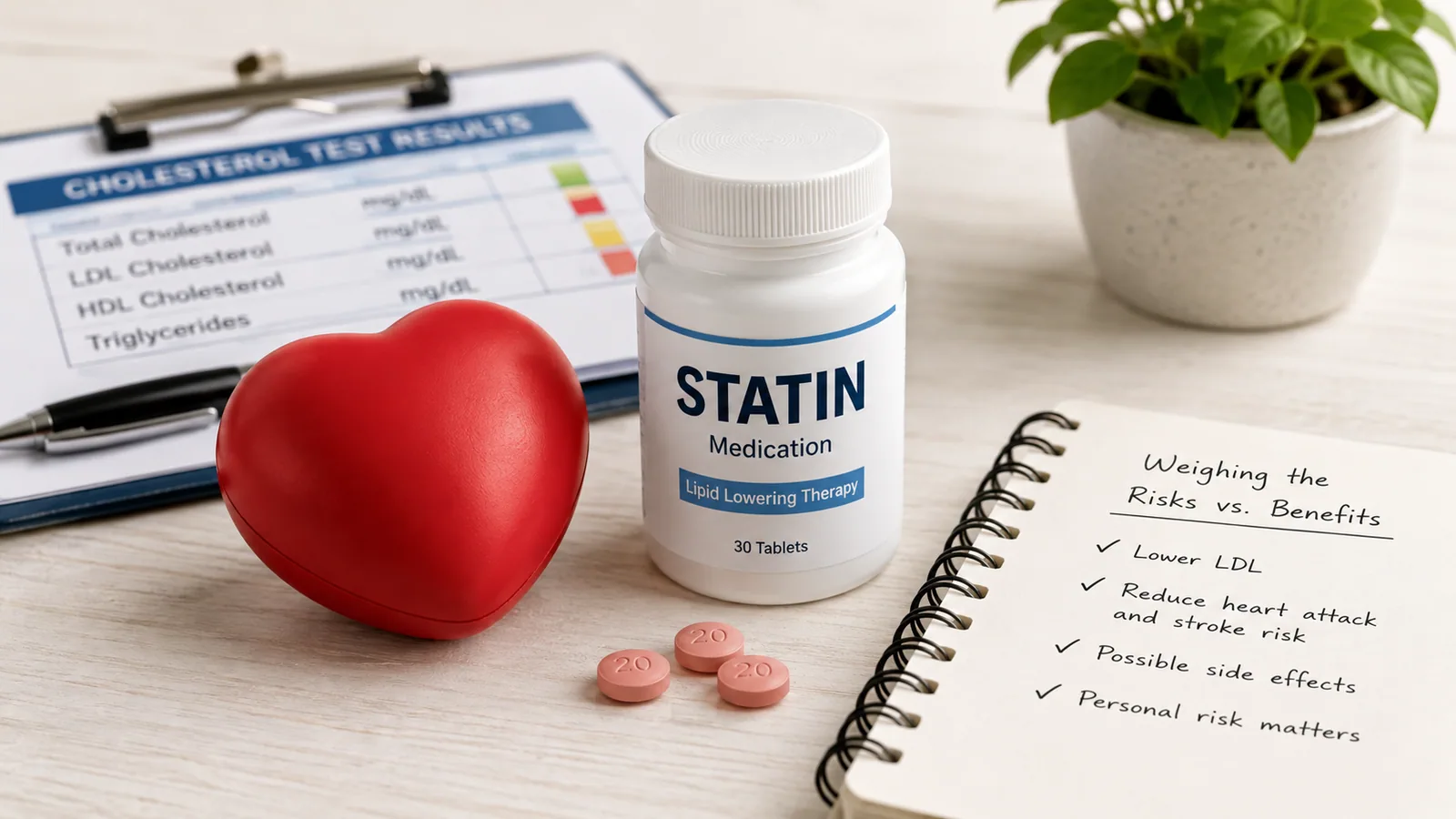
This is where an Lp(a) result connects to a statin conversation. Someone sitting on the fence about starting one, with a borderline risk estimate, may find that an elevated Lp(a) settles the question — not because statins lower Lp(a), but because the overall risk being managed is higher than it appeared.
What Doesn't Lower It
This is the section most pages about Lp(a) skip, and it's the most useful one. Diet, exercise and weight loss do not meaningfully change Lp(a), because the level is genetically set rather than lifestyle-driven. These things remain worth doing for every other cardiovascular reason. They just won't move this number.
Statins don't lower it either. A 2022 systematic review and meta-analysis pooling 39 randomized statin trials in 24,448 patients examined this directly. The change was small in absolute terms — on the order of about 1 mg/dL — and no statin type produced a significant reduction compared with placebo. Some analyses find a modest increase rather than a decrease.
That finding is sometimes reported as a reason to avoid statins, which inverts it. Statins are prescribed to lower LDL, they do that effectively, and lowering LDL reduces events in people with high Lp(a) as in everyone else. The honest statement is narrower: statins do not address the Lp(a)-attributable portion of your risk, so that portion remains after treatment.
The Drugs in Trials, and the September Setback
Several drugs can now lower Lp(a) dramatically — by 80% or more — using RNA-targeted approaches that reduce production of apolipoprotein(a). The question was never whether the number could be moved. It was whether moving it prevents heart attacks and strokes.
On 4 September 2026, the first answer arrived, and it was not the expected one. Novartis announced that Lp(a)HORIZON, a Phase III trial of pelacarsen in 8,323 patients with elevated Lp(a) and established cardiovascular disease, did not meet its primary endpoint. The drug lowered Lp(a), but that reduction did not translate into a significant decrease in cardiovascular death, heart attack, stroke or urgent revascularization.
Two further outcome trials are still running — olpasiran in around 7,300 patients, with completion expected around 2028, and lepodisiran, with data expected toward the end of the decade. They use different agents and different populations, so the pelacarsen result does not settle the field. But it is a genuine setback, and full details are not expected until later this year.
Several explanations are being discussed and none is confirmed yet. The reduction achieved may have been too small in absolute terms for the participants who started at moderately raised levels; genetic analyses had already suggested that a large absolute drop would be needed to shift coronary risk appreciably. The trial enrolled people with established cardiovascular disease already on intensive treatment, which leaves less room for any single addition to show an effect. Or the causal contribution of Lp(a) may be laid down over decades, in which case lowering it late may simply arrive too late.
Whichever it turns out to be, the general lesson is one worth carrying to any biomarker story. A drug moving a number is not evidence that patients do better. Those two things came apart here, in a large and well-conducted trial, which is exactly why outcome trials are run instead of inferring the answer from the biology.
If Yours Comes Back High
A high Lp(a) is not a diagnosis and not an emergency. It's one input into an overall risk picture, and it's most useful when interpreted alongside everything else — blood pressure, LDL, smoking history, family history, glucose.
The two things genuinely worth acting on are a conversation about whether your other risk targets should be tightened, and telling your immediate family. The second is the one people skip, and given that this is a directly inherited trait with no symptoms, it's frequently the most valuable thing a single test produces.
Frequently Asked Questions
Is Lp(a) included in a standard cholesterol test?
No. A standard lipid panel reports total cholesterol, LDL, HDL and triglycerides, and Lp(a) is a separate test that has to be ordered specifically. The cholesterol inside Lp(a) particles is counted within the LDL figure, so someone with high Lp(a) can have a normal-looking panel.
How often should Lp(a) be measured?
Usually once. Lp(a) is roughly 90% genetically determined and stays stable across adult life, so repeat testing rarely adds information. The 2022 European Atherosclerosis Society consensus statement recommends measuring it at least once in every adult's lifetime.
Can diet or exercise lower Lp(a)?
Not meaningfully. Lp(a) levels are largely set by inherited variants of the LPA gene rather than by lifestyle, so diet, exercise and weight loss do not change them appreciably. These remain worthwhile for other cardiovascular risk factors, which do respond.
Do statins lower Lp(a)?
No. A 2022 meta-analysis of 39 randomized trials in 24,448 patients found no significant reduction in Lp(a) with any statin type compared with placebo, and some analyses report a modest increase. Statins are prescribed to lower LDL cholesterol, which they do effectively and which still reduces risk in people with elevated Lp(a).
Is there a drug that lowers Lp(a)?
Several experimental drugs lower Lp(a) substantially, but none has yet been shown to reduce cardiovascular events. In September 2026 the first Phase III outcomes trial, testing pelacarsen in 8,323 patients, missed its primary endpoint despite lowering Lp(a). Two further outcome trials are ongoing.
References
- Kronenberg F, Mora S, Stroes ESG, et al. "Lipoprotein(a) in atherosclerotic cardiovascular disease and aortic stenosis: a European Atherosclerosis Society consensus statement." European Heart Journal, 2022;43(39):3925-3946.
- Kamstrup PR, Tybjaerg-Hansen A, Steffensen R, Nordestgaard BG. "Genetically elevated lipoprotein(a) and increased risk of myocardial infarction." JAMA, 2009;301(22):2331-2339.
- de Boer LM, Oorthuys AOJ, Wiegman A, Langendam MW, Kroon J, Spijker R, Zwinderman AH, Hutten BA. "Statin therapy and lipoprotein(a) levels: a systematic review and meta-analysis." European Journal of Preventive Cardiology, 2022;29(5):779-792.
- Novartis. "Novartis announces Lp(a)HORIZON Phase III topline results for pelacarsen in patients with elevated Lp(a) and established cardiovascular disease (CVD)." Media release, 4 September 2026.